

Hormones & Wellness: How Thyroid, Cortisol & Gut Are Linked
June 6, 2026Achieving overall wellness is closely tied to the balance of our bodily functions. This includes the complex interplay between thyroid function, cortisol levels, and gut health.
When these elements are in harmony, our bodies function optimally. But, an imbalance can lead to health issues.
Understanding the link between thyroid, cortisol, and gut health is key. It helps maintain hormonal balance and promotes overall wellness.
This article will explore how these vital systems are connected. We’ll see how they impact our health. It aims to provide insights into achieving optimal hormonal balance.
The Hormonal Symphony: Understanding Your Body’s Chemical Messengers
Your body works like a well-tuned orchestra. Hormones act as the conductors, controlling many body functions. They help with metabolism, growth, and more. Dr. Mark Hyman, a top expert in functional medicine, said,
“Hormones are like the body’s messengers, delivering instructions to cells and organs to keep the body in balance.”
Key Hormones and Their Primary Functions
Many hormones are key to our health. Thyroid hormones control metabolism, affecting energy and weight. Cortisol, known as the “stress hormone,” helps us deal with stress. It affects blood sugar and fat.
Insulin manages blood sugar levels. Sex hormones like estrogen and testosterone are important for reproduction and overall health.
How Hormones Communicate Throughout Your Body
Hormones talk to different body parts through a complex system. They use endocrine glands, the bloodstream, and target cells. When a hormone is released, it goes to its target cell.
There, it binds to specific receptors, causing a response. This process helps hormones control body functions, keeping us healthy. As Dr. Elizabeth Blackburn, Nobel laureate, noted,
“The communication between hormones and cells is a delicate dance that is essential for our well-being.”
The Thyroid Gland: Your Body’s Metabolic Conductor
The thyroid gland is a small but powerful organ. It controls our metabolic rate and energy levels. Located in the neck, it looks like a butterfly and produces hormones that help our body use energy.
A healthy thyroid gland is key to our health. It makes hormones like triiodothyronine (T3) and thyroxine (T4). These hormones help with metabolism, growth, and development. The pituitary gland tells the thyroid how much to make by releasing thyroid-stimulating hormone (TSH).
T3, T4, and TSH: Understanding Thyroid Hormones
It’s important to know about thyroid hormones. T3 is the active hormone that speeds up metabolism. T4 is stored and turned into T3 when needed. TSH from the pituitary gland helps make T3 and T4.
For more info on thyroid health, check out Thyroid Triumph: Wellness at the Crossroads of Hormonal.
Signs of Thyroid Imbalance and Their Systemic Effects
Thyroid imbalance can be serious. It can cause fatigue, weight changes, mood swings, and heart rate changes. If not treated, it can lead to heart problems and osteoporosis.
As “The thyroid gland is a critical component of our endocrine system”, it’s vital for our health. Knowing the signs of imbalance and getting medical help is important for our well-being.
Cortisol: The Stress Hormone That Affects Everything
Understanding cortisol’s role is key to knowing how our body handles stress. Cortisol, known as the stress hormone, is vital for our stress response. It’s made by the adrenal gland and helps with metabolism and immune function.
The HPA Axis and Stress Response
The Hypothalamic-Pituitary-Adrenal (HPA) axis is a complex system that manages stress. When we feel stressed, the hypothalamus sends out a hormone called CRH. This hormone makes the pituitary gland release ACTH, which then triggers cortisol production in the adrenal glands.
This process is essential for our fight or flight response. It prepares our body to face or flee from stress.
The HPA axis is key to keeping our body balanced and responding to stress. If it’s not working right, we can face health problems like hormonal imbalances.
Chronic Stress and Cortisol Dysregulation
Long-term stress can mess up our cortisol levels, leading to cortisol dysregulation. This can cause either too much or too little cortisol, both of which are bad for our health. Too much cortisol can make us gain weight, mainly around the belly. Too little can make us tired and weaken our immune system.
It’s important to manage chronic stress through lifestyle changes. This includes using stress management techniques and getting enough sleep. Keeping cortisol levels healthy is key to our overall well-being.
Your Gut as a Hormonal Powerhouse
Our gut is more than just a place for digestion. It’s a key player in our body’s hormonal balance. This connection shows how vital gut health is for our overall well-being.
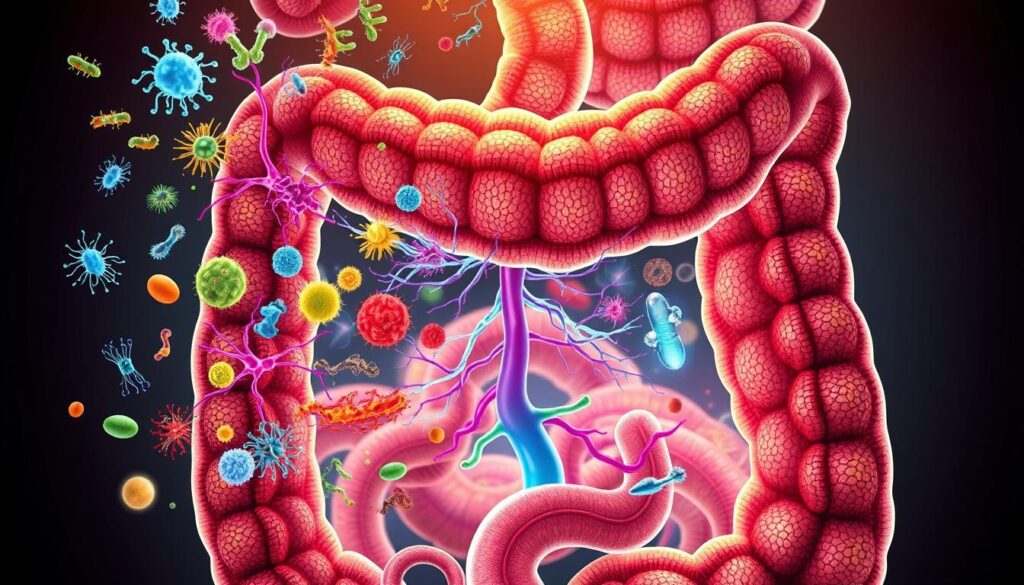
The Enteric Nervous System: Your Second Brain
The enteric nervous system (ENS) is called our “second brain.” It has over 100 million neurons, making it very complex. It can work on its own, without our main brain’s help.
This system talks to our brain through the gut-brain axis. It affects our hormones and health. The ENS can control gut functions and react to things without our brain’s input.
Gut Microbiome’s Role in Hormone Production and Regulation
The gut microbiome is key for making and controlling hormones. Some gut bacteria help make thyroid hormones and estrogen. If the gut microbiome is off balance, it can cause hormonal problems.
A healthy gut microbiome helps keep cortisol, the stress hormone, in check. It also helps make other important hormones. Keeping our gut microbiome balanced is essential for our hormones to work right.
The Interconnected Web: How Thyroid, Cortisol and Gut Health Influence Each Other
The balance between thyroid function, cortisol levels, and gut health is key for overall health. These systems work together, and problems in one can affect the others.
The Thyroid-Adrenal Connection
The thyroid and adrenal glands are connected through a feedback loop. Low thyroid hormone can stress the adrenal glands, causing more cortisol. High cortisol can also harm the thyroid by reducing active thyroid hormone.
Dr. Amy Myers explains in her article on gut health and hormones that these glands work together. When one is off, it can affect the other.
This connection shows why we must look at both systems when dealing with hormonal issues. For example, an underactive thyroid can make us tired. This might make the adrenal glands produce more cortisol, leading to adrenal fatigue.
How Gut Health Impacts Thyroid Function
Gut health is vital for thyroid function, mainly through nutrient absorption and the gut-thyroid axis. A healthy gut microbiome helps convert T4 to T3. An imbalance in gut bacteria can hinder thyroid hormone production.
Gut health also affects nutrient absorption for thyroid function, like iodine, selenium, and zinc. Selenium is key for T4 to T3 conversion, and a lack can cause thyroid problems.
Cortisol’s Effect on Digestive Function
Cortisol, known as the “stress hormone,” greatly affects digestion. High cortisol can cause “leaky gut,” where toxins and undigested food pass through the gut lining. This can trigger autoimmune responses and inflammation.
Cortisol also slows down digestion, causing bloating and constipation. As “stress management is key for a healthy gut”, lowering cortisol can improve digestion.
Hormones and Wellness Balance: The Foundation of Optimal Health
Hormones are key to our health. They control many body functions, like growth and mood. Keeping them balanced is vital for our well-being.
Recognizing Signs of Hormonal Imbalance
Finding hormonal imbalances can be hard. Symptoms vary widely. Look out for:
- Unexplained weight changes
- Fatigue and mood swings
- Sleep disturbances
- Changes in skin and hair health
For more on vitamins for hormone balance, check out our podcast: Vitamins to Balance Hormones in Females.
How Balanced Hormones Support Overall Wellness
When hormones are balanced, our body works best. This balance helps:
- Energy Levels: It keeps energy steady all day.
- Mood Stability: It reduces mood swings and boosts mental health.
- Metabolic Health: It supports a healthy metabolism, helping with weight.

Testing and Monitoring Your Hormonal Health
To find hormonal balance, it’s key to test and watch your hormone levels. Hormonal issues can show up in many ways. So, it’s important to test thoroughly to get the right diagnosis and treatment.
Conventional and Functional Medicine Testing Options
There are many ways to check your hormonal health. You can choose from conventional or functional medicine tests. Conventional tests often use blood tests to check hormone levels, like thyroid tests.
Functional medicine might use saliva or urine tests. These tests look at how well your body makes and uses hormones. For more info on testing for hormone imbalances, check out this resource.
Self-Assessment Techniques for Hormonal Imbalances
Medical tests are important, but you can also check yourself. Here are some ways:
- Track your menstrual cycles and symptoms
- Watch your energy and sleep
- Notice any mood, skin, or hair changes
Keeping a health journal can help you track and understand these signs.
When to Seek Professional Help
If you keep feeling off due to hormonal issues, get help from a doctor. They can tell you what tests and treatments are best. Don’t wait to see a doctor if you’re worried about your hormones. Getting help early can really help you find balance and feel better.
Nutrition Strategies for Hormonal Harmony
The food we eat greatly affects our hormonal health. A balanced diet is key for wellness. It helps keep hormones in check, from thyroid function to cortisol levels and gut health.
Thyroid-Supporting Foods and Nutrients
The thyroid gland needs certain nutrients to work right. Iodine is vital for making thyroid hormones. Foods like seaweed and iodized salt are good sources.
Selenium and zinc also help the thyroid. You can find them in Brazil nuts and oysters.
- Iodine-rich foods: seaweed, iodized salt
- Selenium-rich foods: Brazil nuts, fish
- Zinc-rich foods: oysters, beef, chicken
Eating to Balance Cortisol Levels
Cortisol, or the stress hormone, can be managed through food. Eating foods high in omega-3 fatty acids like salmon and flaxseeds helps. They reduce inflammation and support the adrenals.
Also, eating complex carbs like whole grains and sweet potatoes helps. They keep blood sugar stable, which lowers cortisol.
Gut-Healing Dietary Approaches
A healthy gut is key for hormonal balance. Adding fermented foods like yogurt, kefir, and sauerkraut to your diet helps.
Also, eating prebiotic-rich foods like asparagus and bananas feeds good gut bacteria.
- Fermented foods: yogurt, kefir, sauerkraut
- Prebiotic-rich foods: asparagus, bananas, onions
By following these nutrition tips, you can help your body stay in hormonal balance and feel better overall.
Lifestyle Practices to Support Hormonal Balance
For hormonal balance, we need a whole-body approach. Making smart choices every day can help our hormones stay in check. This supports our health and well-being.
Sleep Optimization for Hormonal Health
Good sleep is key for hormone balance. 7-9 hours of sleep each night helps control hormones like insulin and growth hormone. To sleep better, stick to a routine, make your bedroom cozy, and avoid screens before bed.
Stress Management Techniques
Managing stress is important for hormone balance. Meditation, yoga, and deep breathing can lower cortisol levels. Doing these regularly can help balance hormones and boost health.
Exercise Approaches for Hormonal Balance
Exercise is vital for hormone health. Mix aerobic, strength, and flexibility exercises to balance hormones. Exercise also boosts insulin sensitivity and cuts stress.
Adding these lifestyle habits to our daily lives helps us support our hormone health. This way, we can work towards better overall wellness.
Your 30-Day Hormonal Reset Action Plan
Starting a 30-day plan can change your life by balancing your hormones. This plan helps you use what you’ve learned about your thyroid, cortisol, and gut health.
First, look at your lifestyle and what you eat. Find out what might be upsetting your hormones, like too much stress or bad foods. Start with small steps, like eating foods that help your thyroid, like seaweed and nuts. Also, try to relax more with meditation or yoga.
As you move through the 30 days, work on getting better sleep, exercising, and eating foods that heal your gut. These changes will help control your cortisol, support your thyroid, and keep your gut healthy.
By the end of 30 days, you’ll likely feel more alive, have better digestion, and feel happier overall. Stick to your plan, and you’ll be on your way to lasting hormonal balance.