Vagus Nerve Stimulation for Stress Relief: What You Should Know
March 10, 2026Stress and anxiety are big problems in today’s fast world. Luckily, vagus nerve stimulation (VNS) is a new way to help. It can make you feel better and improve your overall health.
VNS works by stimulating the parasympathetic nervous system. This system helps calm your body and mind. When it’s activated, you can feel less anxious and happier.
Looking into VNS for stress relief shows it could really help your mental health. Learning about VNS and its benefits is a great first step. It can lead to a more balanced and healthy life.
Understanding the Vagus Nerve and Its Function
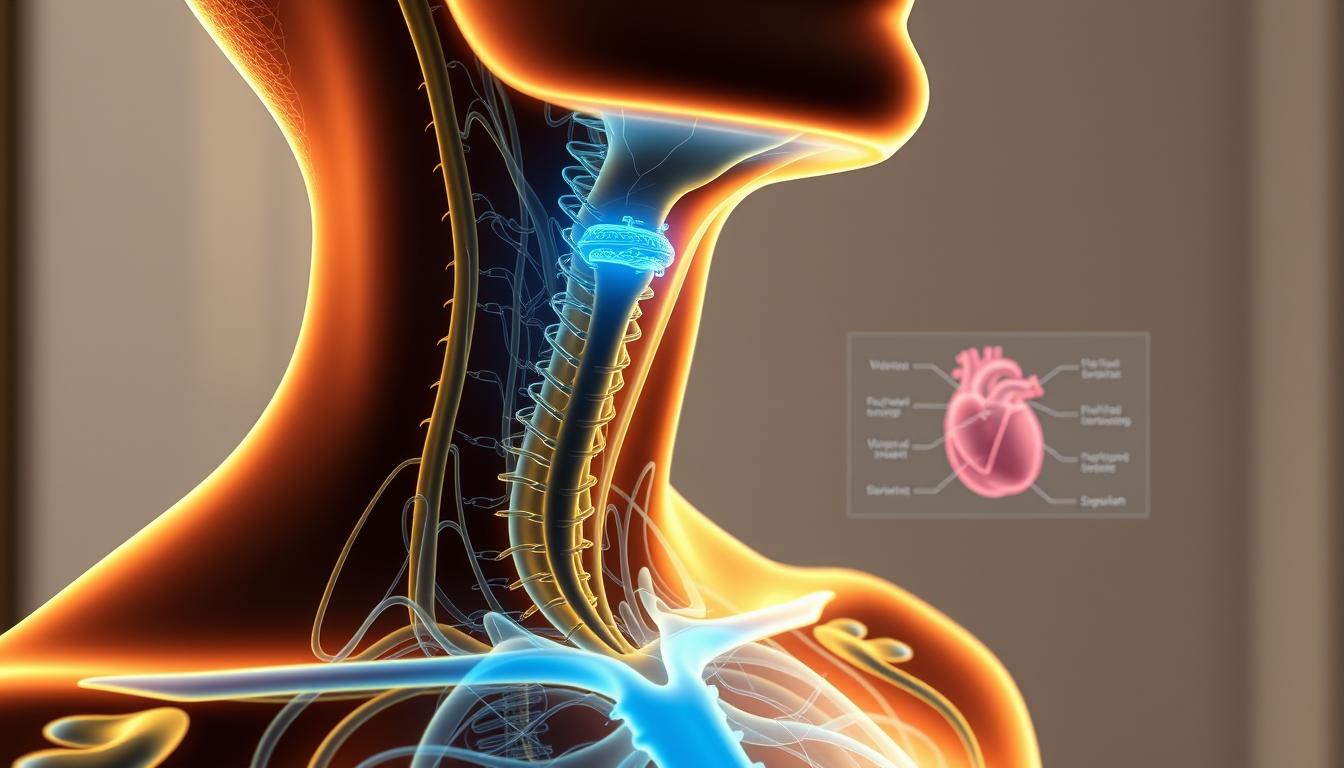
The vagus nerve is key to managing stress in our bodies. It’s a vital part of our nervous system. This nerve, or cranial nerve X, is the longest and crucial for many functions. It helps control heart rate, aids digestion, and manages stress responses.
Anatomy of the Vagus Nerve
The vagus nerve starts in the brainstem and goes through the neck, thorax, and into the abdomen. It touches many organs, affecting functions like heart rate and digestion.
The Vagus Nerve’s Role in the Parasympathetic Nervous System
The vagus nerve is a major part of the parasympathetic nervous system. It helps the body relax and digest, balancing the “fight or flight” response. This balance is essential for keeping the body stable and recovering from stress.
Connection Between Vagal Tone and Stress Response
Vagal tone shows how well the vagus nerve works. A higher tone means better stress handling and recovery. It shows the body can control heart rate and blood pressure well. Improving vagal tone helps the body deal with stress better.
How Vagus Nerve Stimulation Works to Reduce Stress
Vagus nerve stimulation is a new way to fight stress and anxiety. It works by turning on the vagus nerve. This nerve helps calm the body’s stress response.
The Science Behind Vagal Tone Regulation
Vagal tone shows how well the vagus nerve is working. A high vagal tone means better stress handling and health. Stimulation of the vagus nerve boosts this tone, helping manage stress better.
Understanding the Polyvagal Theory
The polyvagal theory by Dr. Stephen Porges explains the vagus nerve’s role in stress and social connection. It says the vagus nerve controls how we react to safety, danger, and threats. This theory shows how stimulation can make us feel safer and more relaxed.
“The polyvagal theory offers a neurophysiological basis for understanding how vagus nerve stimulation can influence stress response and emotional regulation.” – Dr. Stephen Porges
Measuring Vagal Tone and Heart Rate Variability
Heart rate variability (HRV) shows how well the vagus nerve is working. It’s the change in time between heartbeats. A higher HRV means better heart health and strong vagal tone. Stimulation of the vagus nerve can increase HRV, helping us handle stress better.
Learning about vagus nerve stimulation helps us see its benefits for stress relief. It involves understanding vagal tone, the polyvagal theory, and heart rate variability.
Health Benefits of Vagus Nerve Stimulation
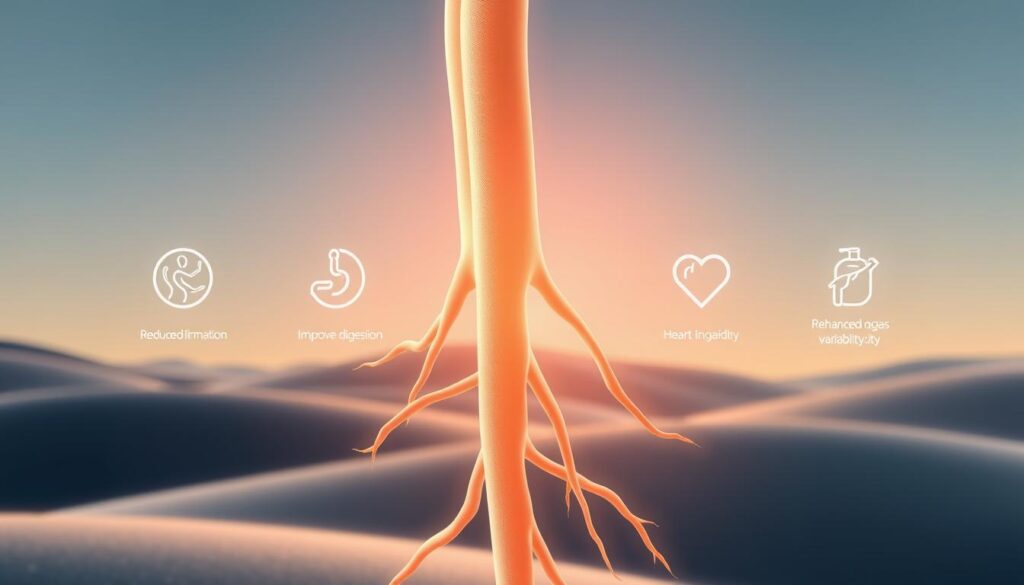
Vagus nerve stimulation is gaining attention for its health perks. It helps lower stress and anxiety and boosts mood. Research supports these benefits, showing how it can improve health.
Stress and Anxiety Reduction
This therapy boosts parasympathetic activity and cuts down on stress and anxiety. Studies show it helps those with anxiety disorders a lot.
Mood Enhancement and Depression Management
Stimulating the vagus nerve can make mood better and reduce depression symptoms. Clinical trials prove it’s effective for treatment-resistant depression.
Inflammation Reduction and Immune Function
Vagus nerve stimulation can also affect the immune system and lower inflammation. It reduces pro-inflammatory cytokines, helping with chronic inflammation.
Potential Benefits for Digestive Health
It might also help with digestive health. It improves gut motility and secretion. This could ease symptoms of digestive issues.
Natural Techniques for Vagus Nerve Stimulation
Natural ways to stimulate the vagus nerve can help manage stress and boost mental health. These methods are easy to add to your daily routine. They help improve your overall well-being and resilience.
Deep Breathing Exercises
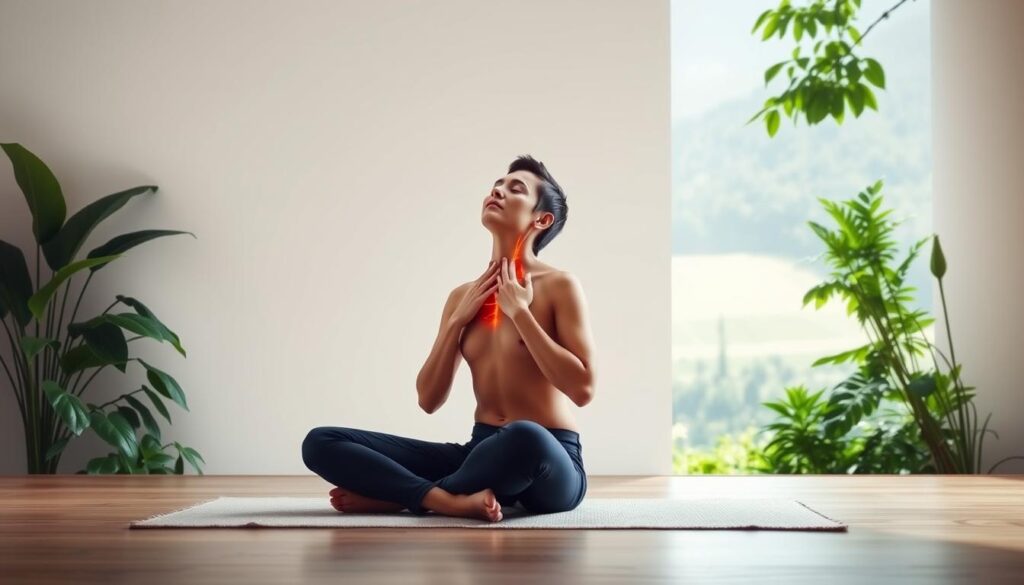
Deep breathing is a simple yet effective way to stimulate the vagus nerve. It involves taking slow, deep breaths to calm the nervous system and reduce stress. Deep breathing is easy to do anywhere, making it great for managing stress on the go.
Cold Exposure Methods
Cold exposure, like taking a cold shower or spending time outside in cold weather, can also stimulate the vagus nerve. The sudden change in temperature can increase vagal tone, helping the body handle stress better. Cold showers are a simple way to add cold exposure to your daily routine.
Vocal Techniques: Humming, Chanting, and Singing
Vocal techniques like humming, chanting, and singing can also stimulate the vagus nerve. These activities help regulate breathing and heart rate, leading to relaxation. Humming and chanting are especially effective because they require controlled breathing and can be done in various settings.
Meditation and Mindfulness Practices
Meditation and mindfulness practices are great for stimulating the vagus nerve. They help you focus on the present moment, reducing stress and anxiety. Regular meditation can increase vagal tone, improving your overall well-being.
Physical Activities That Stimulate the Vagus Nerve
Physical activities like yoga, tai chi, or walking can also stimulate the vagus nerve. These activities promote relaxation, improve mood, and enhance cardiovascular health. For more information on the benefits of vagus nerve stimulation, visit Cleveland Clinic’s resource on Vagus Nerve.
Medical Vagus Nerve Stimulation Devices and Treatments
Medical devices for vagus nerve stimulation are a new way to handle stress and health problems. These devices and treatments aim to directly stimulate the vagus nerve. They offer relief for many conditions.
FDA-Approved Implantable Devices
FDA-approved implantable devices are a big step forward in vagus nerve stimulation. These devices are put in surgically and send electrical impulses to the vagus nerve. The Mayo Clinic says this therapy can reduce seizures and improve mood.
Transcutaneous Vagus Nerve Stimulation (tVNS)
Transcutaneous vagus nerve stimulation (tVNS) is a non-invasive choice. It uses devices to stimulate the vagus nerve through the skin, usually at the ear or neck. No surgery is needed.
Emerging Technologies and Research
The field of vagus nerve stimulation is always growing. Emerging technologies and research are working to make devices better and treat more conditions.
When to Consider Clinical Intervention
Knowing when to seek medical help is key. If you’re dealing with severe or ongoing symptoms, even after trying natural methods, talk to a doctor. They can discuss medical vagus nerve stimulation options with you.
Potential Risks and Considerations
Vagus nerve stimulation can help with stress and well-being. But, it’s important to know the possible risks and things to think about.
Common Side Effects of Vagus Nerve Stimulation
Vagus nerve stimulation can cause side effects. These include:
- Dizziness or lightheadedness
- Nausea or vomiting
- Changes in voice or hoarseness when using vocal techniques
- Headaches or migraines
Most side effects are mild and go away quickly. Adjusting the technique can help. Knowing about these effects is key to managing them.
Who Should Exercise Caution or Avoid These Techniques
Some people should be careful or avoid vagus nerve stimulation. This includes those with:
- Implantable medical devices like pacemakers
- History of heart conditions or arrhythmias
- Severe mental health conditions without professional guidance
People with health concerns should talk to their doctor before trying vagus nerve stimulation.
Importance of Medical Consultation
Seeing a healthcare professional before starting vagus nerve stimulation is crucial. They can give advice based on your health. For more info, check out Cleveland Clinic’s Vagus Nerve Stimulation page.
Knowing the risks and taking steps to avoid them lets you use vagus nerve stimulation safely in your wellness routine.
Creating Your Personal Vagus Nerve Stimulation Routine
Creating a personal vagus nerve stimulation routine can help manage stress and boost well-being. By adding various techniques to your daily life, you can enhance your vagal tone and lower stress levels.
Begin by picking a few methods that appeal to you, like deep breathing, meditation, or humming. For instance, research indicates that “bee humming breathing” for five minutes can help lower blood pressure in people with hypertension. It’s important to be consistent, so try to do these activities at the same time every day.
As you try out different vagus nerve stimulation techniques, notice how your body reacts. You can tweak your routine to include activities that give you the most benefits. By making vagus nerve stimulation a daily habit, you can actively reduce stress and enhance your life quality.