How to Blend Productivity & Fitness in a Busy Schedule
May 7, 2026Finding time for exercise can be tough when life is packed. Yet, regular physical activity is key for both body and mind. Laura Vanderkam says exercise boosts productivity. Adding physical activity to your day can greatly improve your life quality.
To find this balance, you need good time management and workout scheduling. Making health a priority and squeezing in workouts can lead to big gains. For more tips on balancing fitness with a hectic schedule, see Holly Roser’s advice on balancing fitness and a busy life.
The Modern Challenge: Time Scarcity and Health
Today, people often face a tough choice: work hard or stay healthy. Many end up sitting a lot, whether at desks or screens. This sedentary life affects both work and health.
Statistics on Sedentary Lifestyles and Productivity
Studies show a growing problem of sitting too much. The World Health Organization says 1.9 million deaths each year are linked to not moving enough. Sitting too long can also make you less focused and less productive at work.
The Cost of Neglecting Physical Wellness
Ignoring your body can lead to serious health problems. These include diabetes, heart disease, and some cancers. It can also cause depression and anxiety, making it hard to work well.
Why This Balance Matters Now More Than Ever
In our fast, tech-filled world, finding a balance is key. With remote work, it’s easy to mix work and personal life. Using productivity techniques that include moving can help stay healthy and succeed at work.
Understanding the modern challenges and the need for balance is the first step. It helps create a healthier, better way of living.
Understanding the Fitness-Productivity Connection
Regular exercise is great for your body and brain. It boosts your cognitive function and productivity. This makes it key to balancing fitness and work.
How Exercise Enhances Cognitive Function
Exercise makes our brain work better. It does this in a few ways:
- It increases blood flow to the brain, giving it more oxygen and nutrients.
- It helps create new brain cells.
- It releases a protein called BDNF, which helps brain cells survive.
Brain Chemistry Changes During and After Workouts
Exercise changes our brain’s chemistry. It releases endorphins, which make us feel good and reduce stress. It also affects other important brain chemicals like dopamine and serotonin, which help us stay focused and motivated.
Improved Focus and Decision-Making
Regular exercise improves our focus and decision-making skills. A study found in “The Impact of Exercise on Cognitive” shows it boosts our ability to plan and make decisions.
The Energy-Boosting Effects of Regular Movement
Exercise gives us a quick energy boost. It helps our body carry oxygen and nutrients better, improving our heart health and energy. This is great for people with busy work lives, helping them stay alert and productive all day.
Stress Reduction Through Physical Activity
Exercise is a proven way to reduce stress. It relaxes our muscles and helps us relax. The stress-reducing effects of exercise lead to a clearer mind, better focus, and overall well-being. These are all important for staying productive.
By understanding the link between fitness and productivity, we can use exercise to improve our brain function, energy, and work performance.
Assessing Your Current Schedule
Starting a balanced lifestyle means looking at your daily schedule closely. Knowing how you spend your time helps spot where you can do better. It also shows how to fit in more exercise.
Conducting a Time Audit
A time audit is a detailed look at how you spend your time. It helps you see what wastes your time and where you can do more. This is a key step to improving your daily routine.
Tools and Methods for Tracking Your Day
There are many ways to track your day, from paper planners to apps like Toggl and RescueTime. Choosing the right tool depends on your personal preference and the level of detail you wish to track.
- Digital apps for automated tracking
- Spreadsheets for customized logging
- Paper planners for a more tactile approach
Identifying Time Wasters and Energy Drains
After seeing your daily activities, find out what wastes your time. These are tasks that take up a lot of time but don’t give much value or energy.
Examples include too much social media, unnecessary meetings, and long chats that aren’t work-related.
Finding Hidden Opportunities for Movement
After finding what’s not working, look for chances to move more. This could be taking the stairs, walking to someone instead of emailing, or exercising during lunch.
By doing a detailed time audit and finding ways to improve, you can balance work and exercise. This makes your day more productive and healthy.
Creating Your Fitness Productivity Balance Plan
Creating a fitness plan is more than just finding time to exercise. It’s about making physical activity a part of your daily life. This means setting realistic goals, knowing when you’re most productive, and creating a flexible schedule for both work and fitness.
Setting Realistic Fitness Goals for Busy Professionals
Busy professionals need to set achievable fitness goals. It’s important to know your current fitness level and set realistic targets that fit your lifestyle. For example, aiming for 30 minutes of moderate exercise each day is easier than trying to fit in a 2-hour gym session once a week.
To set effective fitness goals, consider the following:
- Start with small, manageable changes.
- Be specific about your goals (e.g., walking 10,000 steps daily).
- Make sure your goals are measurable and achievable within your schedule.
Aligning Exercise with Productivity Peaks
Knowing when you’re most productive can help you schedule workouts better. Many people find they’re most productive in the late morning and early afternoon. Aligning your exercise with these peaks can boost your performance.
Morning vs. Afternoon vs. Evening Exercise
The best time to exercise varies based on your schedule and energy levels. Some prefer morning exercise to start the day positively, while others like afternoon or evening workouts to relieve stress. Find what works best for you.
Designing a Flexible Weekly Template
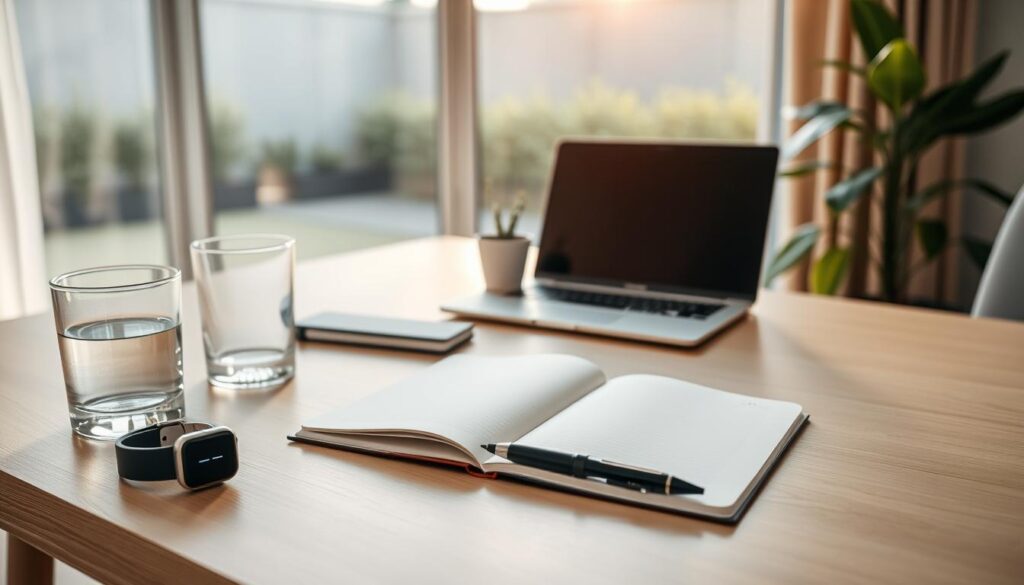
A flexible weekly template is essential for balancing fitness and productivity. It lets you plan workouts around your work and other activities. When creating your template, think about your most productive times and how to fit in physical activity.
Sample Schedules for Different Work Styles
Here are examples of integrating fitness into different work styles:
- For those with a traditional 9-to-5 schedule, consider lunchtime workouts or morning jogs.
- If you work from home, schedule short breaks for stretching or a quick home workout.
- For those with variable shifts, plan your workouts around your days off or during less busy periods.
By creating a personalized fitness plan, you can find a sustainable balance between work, fitness, and well-being.
Micro-Workouts: Maximizing Minimal Time
Micro-workouts are changing how we see fitness in our busy lives. They let us fit in exercise without taking up a lot of time. This way, we can stay healthy and productive without big workouts.
The Science Behind Short-Duration Exercise
Studies show that short exercise periods are very beneficial. Short-duration exercise can make our hearts healthier, lift our mood, and give us more energy. A study in the Journal of the American Heart Association found that a few minutes of exercise daily can greatly improve health.
“The key is not to spend hours at the gym, but to incorporate movement into your daily life.”
10 Five-Minute Workout Ideas for Office Breaks
Adding exercise to your office day is easy and works well. Here are some five-minute workout ideas for your breaks:
No-Equipment Options
- Chair squats
- Desk push-ups
- Leg raises
- Seated marching
- Wall sit
Desk-Friendly Movements
- Desk stretches
- Wrist extensions
- Seated leg lifts
- Ankle rotations
- Shoulder rolls
These exercises can be done quietly at your desk. They’re great for office settings.
Tracking Progress with Minimal Time Investment
It’s important to track your progress, even with little time. A fitness tracker or app can help you keep track and stay motivated. Consistency is key for seeing results from micro-workouts.
By adding these short exercises to your daily routine, you can balance work and fitness. This is possible even on the busiest days.
Productivity Techniques That Support Fitness Integration
Productivity and fitness go hand in hand. The right methods can help you reach your fitness goals faster. In today’s busy world, it’s hard to find time for work and exercise. But, with the right techniques, you can fit both into your schedule.

Time Blocking for Exercise Consistency
Time blocking is a great way to schedule your day. It means setting aside fixed times for tasks. By doing this for exercise, you can stick to your routine. For example, setting aside 7:00-8:00 AM for a jog or yoga can become a daily habit.
James Clear, author of “Atomic Habits,” says, “You do not rise to the level of your goals. You fall to the level of your systems.” Time blocking is a system that makes exercise a daily habit.
The Pomodoro Technique with Movement Breaks
The Pomodoro Technique is about working in focused 25-minute chunks, then taking a 5-minute break. Adding movement to these breaks boosts your activity levels. Simple actions like stretching or a short walk can make a big difference.
- Stretching exercises to loosen up tight muscles
- Jumping jacks to get your heart rate up
- A short walk to refresh your mind
Task Batching to Free Up Workout Time
Task batching groups similar tasks together for better efficiency. This way, you can free up time for workouts or other important activities. For example, you can batch tasks like checking emails or making calls.
“The key is not to prioritize what’s on your schedule, but to schedule your priorities.” –
Practical Examples for Different Professions
Professions need different scheduling strategies. For instance, a software developer might batch coding tasks for longer workouts. A marketing professional might use the Pomodoro Technique with breaks to stay energized.
- For a freelancer: Schedule client work in the morning and reserve afternoons for exercise and personal projects.
- For an office worker: Use lunch breaks for a workout or a walk, and apply the Pomodoro Technique during work hours.
- For an entrepreneur: Delegate tasks to free up time for strategic planning and exercise.
Technology Tools for Fitness Productivity Balance
Technology has changed how we live, making it easier to stay fit and productive. Now, we can track our workouts and manage our time better. This helps us keep a healthy balance between work and life.
Apps That Combine Productivity and Fitness Tracking
Many apps now help with both fitness and work. For example, Fitbit Coach offers quick workouts during breaks. This boosts energy and productivity. MyFitnessPal tracks food and workouts, giving a full picture of health.
“Technology is a useful servant but a dangerous master.” This quote by Christian Lous Lange reminds us to use tech wisely. Apps that track fitness and work help us reach our goals without feeling stressed.
Wearable Tech That Enhances Both Areas
Wearable tech has changed how we track our health and manage tasks. Devices like Apple Watch and Fitbit monitor fitness and send notifications. They also help control music and track heart rate, improving focus.
- Track daily activity and set fitness goals
- Receive notifications and manage emails on the go
- Monitor heart rate and stress levels
Digital Minimalism for Focus and Physical Health
Digital minimalism improves focus and health. By limiting apps and notifications, we reduce distractions. This lets us spend more time on physical activities.
“The key is not to prioritize what’s on your schedule, but to schedule your priorities.”
by
shows the importance of focusing on what matters most. This helps achieve a better balance.
Setting Up Notifications That Work For You, Not Against You
Customizing notifications is key to staying focused. By setting up notifications that fit your priorities, you avoid constant interruptions. For example, turning off non-essential notifications during workouts or focus times boosts productivity.
In conclusion, technology provides many tools for balancing fitness and work. Using the right apps, wearable tech, and digital minimalism strategies improves well-being and goal achievement.
Overcoming Common Obstacles and Excuses
The path to blending work and fitness is filled with challenges. But, with the right strategies, you can overcome these hurdles. Many people struggle to reach their goals in both areas.
Strategies for High-Pressure Work Periods
When work gets tough, it’s key to focus on what’s important and manage your time well. Try incorporating micro-workouts into your day, like taking the stairs or jumping jacks during breaks. A study on the National Center for Biotechnology Information website shows that exercise boosts your brain power, helping you stay sharp and productive.
Managing Energy Instead of Just Time
It’s vital to manage your energy for both work and fitness. Discovering your energy highs and lows helps you plan better. Schedule workouts and big tasks when you’re most energetic.
Building Support Systems and Accountability
A strong support network is key to keeping up with fitness and work. Finding a workout buddy or joining a fitness group can keep you motivated and on track.
Finding Workout Partners in Unexpected Places
Look for workout buddies in your daily life, like coworkers or family. You can also join local classes or online groups. This social support can be a big help in reaching your goals.
Your Sustainable Path Forward: Small Changes, Big Results
Learning to balance fitness and work in a busy life is possible with small steps. By using the tips shared, you can mix physical health with work efficiency well.
For lasting success, focus on making changes that stick. Start with tiny workouts, use smart work tips, and tech tools. Aim for a routine that feels like second nature.
Embracing small, lasting changes boosts both your health and productivity. This leads to lasting benefits for your well-being. Remember, every little action adds up, making a big difference.
Ready to start your journey towards balance? Add one or two new habits to your day. See how these small actions can lead to big changes over time.